What "we own the inventory" actually means — OEM, PAI and the supply chain
Most app budget passes through three intermediaries before it reaches a placement. Here's what direct OEM integration changes, and what Oppo PAI really is.
Every agency says they get good rates. Very few can tell you, for a given placement, who they bought it from and how many parties took a margin on the way. That's not evasiveness — it's genuinely how most app-install buying works. The DSP buys from an exchange, the exchange from a network, the network from the publisher, and the client's rupee arrives at the placement several margins lighter with nobody able to name the actual source.
What sits in the supply chain
The practical consequence isn't just cost, it's blindness. When a campaign underperforms in a resold chain, you can't tell whether the placement was wrong, the audience was wrong, or the inventory was simply misrepresented two layers up. You optimise by moving budget between opaque line items and hoping the average improves.
Direct integration removes the guessing. We hold integrations with OPPO, Vivo, Samsung, Xiaomi and Huawei directly, plus Google Play Store inventory and direct partnerships with apps including imo, Bigo, Snapchat, Ixigo, Truecaller, ShareChat and Snack Video. When something underperforms, we know precisely which placement produced it because there's no reseller in between to obscure it.
Oppo PAI, and why out-of-box placement is different
Play Auto Installs is the placement most people outside the OEM world haven't encountered. It lets Oppo configure which Play Store apps are installed as part of a device's out-of-box experience — server-side, without building a separate software image per configuration. The user's first interaction with the app is on a brand-new phone they're actively setting up.
That's a fundamentally different intent context from an interstitial someone taps to dismiss. It's also why OEM inventory rewards being bought carefully rather than in bulk: the placement is scarce, and the difference between a well-matched app and a poorly-matched one shows up immediately in retention rather than in install volume.
What it looks like in the numbers
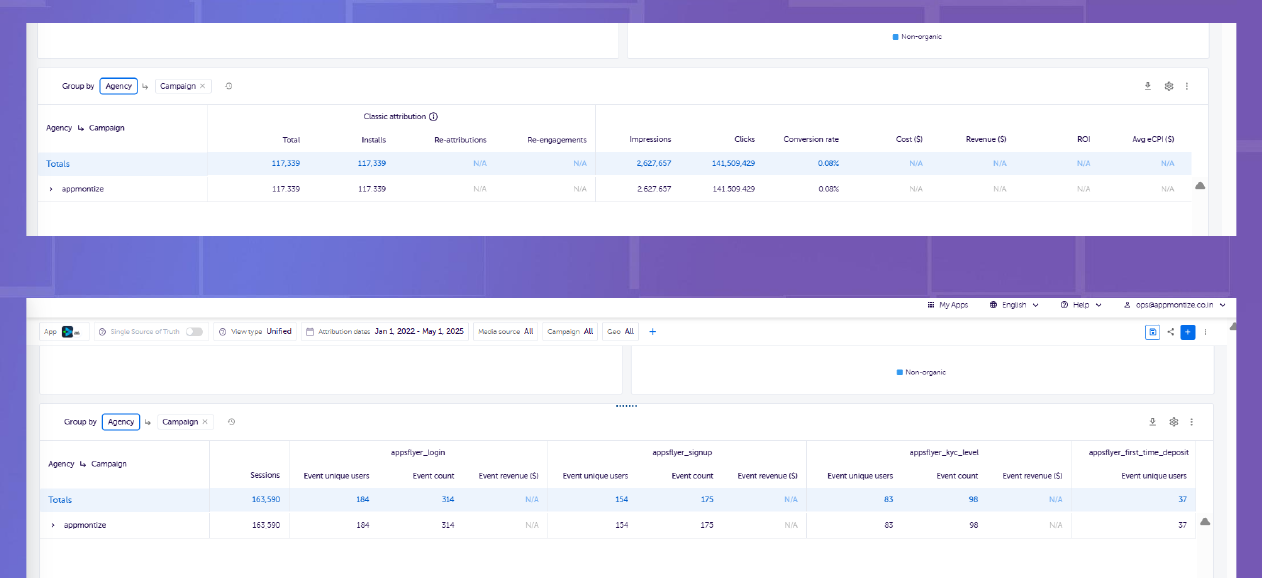
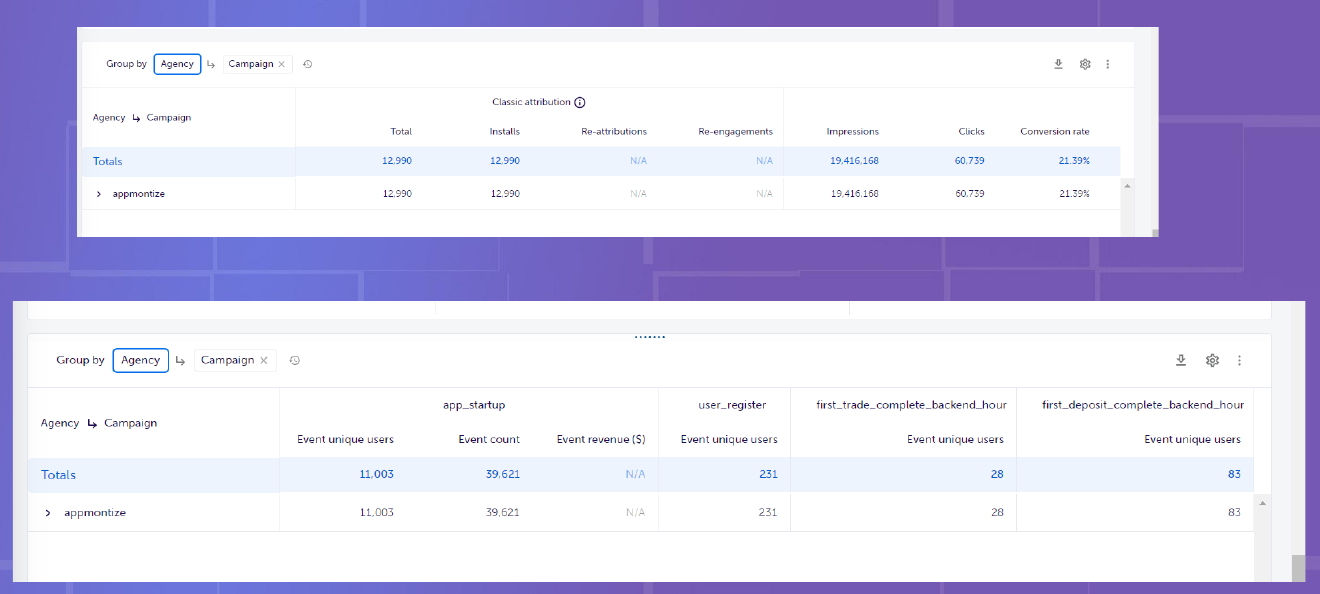
Our OKX campaign converted at 21.39% — 12,990 installs from 60,739 clicks against 19.4 million impressions. Compare that to a conventional click-volume crypto buy: our own Betwinner campaign ran 406 million clicks at 0.07%. Same category, same team, wildly different shape, because one was bought as impressions against qualified placements and the other as clicks at scale.
Owning the supply is also what makes unusual market coverage possible. Daraz ran across Bangladesh, Sri Lanka and Nepal — 2,000,316 clicks and 9,552 conversions in three markets where most competitors have no direct supply at all. That isn't a media-planning insight, it's a supply-chain one.